
Philibert Aspairt, the Cataphiles and the Paris Catacombs Ghost Stories
The doorkeeper
Philibert Aspairt was born in 1732 and worked as a doorkeeper at the Val-de-Grâce hospital in the 5th arrondissement. On 3 November 1793, during the Terror, he went down a staircase in the hospital courtyard into the quarry network beneath and did not come out.
Why he went is unknown. The suggestion repeated most often is that he was making for the cellars of a nearby monastery, and it is a guess. Whatever the errand, his candle would not have lasted long enough for the return.
Eleven years
He was found in 1804, in a gallery, by workers in the quarries. The story that has come down says he was identified by the ring of hospital keys still on his belt. He was buried where he was found on 30 April 1804, and the stone over him carries both dates: lost in this quarry on 3 November 1793, found eleven years later and buried in the same place.
Why 3 November matters underground
Aspairt became the patron saint of the quarries by long habit rather than by any decision. His stone is one of the few fixed points in a system that is otherwise unlabelled, and the date of his disappearance is marked by the people who go down there.
The claim that his ghost rises every 3 November to unsettle visitors is folklore, and it circulates mostly in tour marketing rather than in any record. It is a good story. It is not a documented one.
The cataphiles
Paris has a small, durable subculture of people who enter the closed quarries. They call themselves cataphiles, they map the galleries, they name the chambers, and they pass the maps between them. Some of what they have built down there is remarkable.
In 2004 police searching a section beneath the 16th arrondissement found a fully fitted cinema in a chamber nobody official knew existed: tiered seating cut into the stone, a screen, a projector, a bar. When they returned days later the equipment was gone and a note had been left telling them not to look for it.
What the cataphiles actually do down there
The romantic version is parties. The ordinary version is surveying. Groups spend whole nights checking galleries against maps that are decades old, marking collapses, naming chambers and passing the corrections on. A significant part of what is known about the network below the managed site is amateur work.
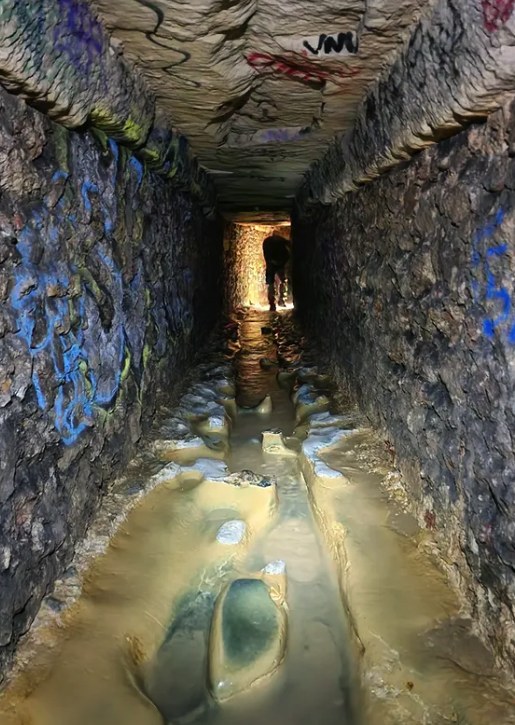
There is a second, less charming side: graffiti runs for hundreds of metres in places, and rubbish accumulates in the chambers that are easiest to reach. The photographs of painted, flooded tunnels that circulate under the name “Paris Catacombs” are almost always this — the closed network, not the ossuary, and nothing a ticket or a tour will show you.
Documented, folklore, or false
| Claim | Status |
|---|---|
| Aspairt lost 3 November 1793, buried in place 30 April 1804 | Documented — his tombstone carries both dates |
| An underground cinema was found in 2004 | Documented — widely reported at the time |
| The ossuary holds several million people | Documented — stated by the city |
| Aspairt’s ghost walks on 3 November | Folklore — no record supports it |
| You can visit his grave | False — it is behind the barrier |
| A ghost tour of the ossuary exists | False — no operator sells one |
So what can you actually book?
Three things, and the third is what most people asking about ghost tours are really after.
- A self-guided ticket — timed entry and an audio guide on the lit public route. Atmospheric, but you are alone with it.
- A guided walk — ninety minutes to two hours with someone telling the stories as you pass the thing they belong to.
- Restricted access — a guard unlocks side chambers for your group: a skull-lined chapel, the quarryman’s carvings, the lower galleries. This is the eeriest legal option there is.
There is no night visit of any kind: last admission is 19:30 and the site closes at 20:30. The visiting guide has the full hours.
Why the quarries generate stories at all
Three hundred kilometres of unlit gallery under a capital city is a story engine. The network is unmapped in places, the maps that exist are decades old, and the people who know it best have every reason not to publish. Anything could be down there, which is not the same as anything being down there.
Add the ossuary itself — several million people, arranged, inscribed and lit — and the pull is obvious. Most of what circulates is embroidery on two facts: the quarries are real and vast, and the bones are real and countable.
The one thing worth being genuinely careful about
Not ghosts. Water, air and orientation. Sections of the closed network flood without warning, the air is poor in dead ends, and people who have gone in with a map and a torch have still needed finding. The fines are the least of it.
The managed site has none of those problems: it is drained, monitored since the 2026 works, lit throughout and staffed at both ends. What it is like inside describes it honestly, and it is nothing like the flooded galleries in the photographs that circulate under the same name.
Why the quarries stay closed
Entering the network beyond the managed site is an offence, and it is enforced. It is also genuinely dangerous: sections flood, the air is poor in places, and parts have collapsed. There is no licensed operator taking visitors past the barrier, and the ones who imply otherwise are selling the managed site with a different adjective.
Which is not a loss. The lawful 1.5 km holds the arranged remains of a vanished city, and behind five locked gates there are chambers most visitors never see. The route and map page shows exactly where the managed site ends and the closed network begins.
Tours that fit this trip
Chosen for what this post covers, not for what sells.
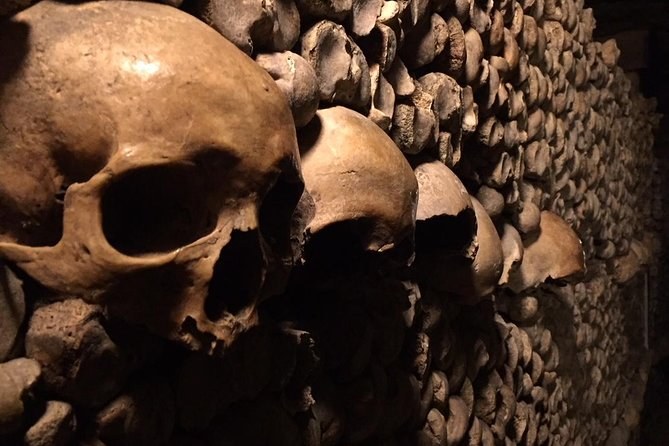
Catacombs of Paris Small Group Restricted Access Tour
Seven travellers and a guide with time for the stories, not just the route.
From $223 per person
Check Availability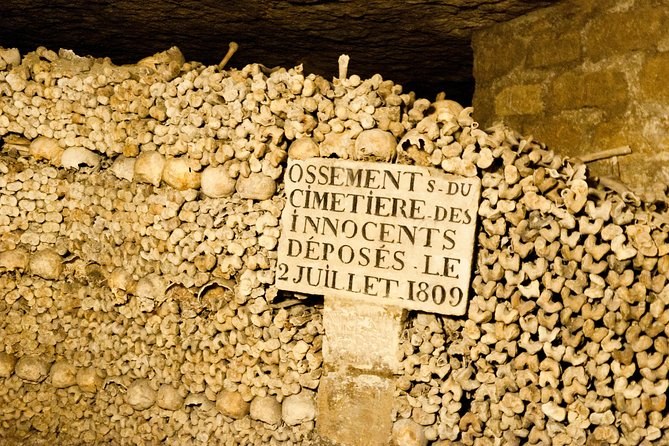
Paris Catacombs Tour with VIP Access to Restricted Areas
Goes beyond the public path and explains how the quarries came to be used.
From $292 per person
Check Availability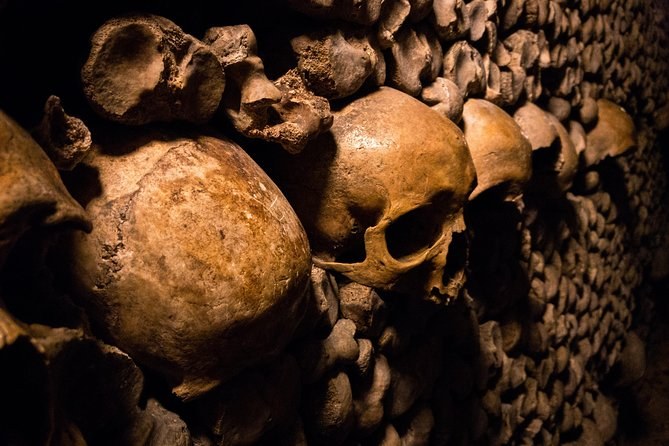
Paris Catacombs Guided Tour
Ninety minutes of legends and origins with a local guide.
From $163 per person
Check Availability